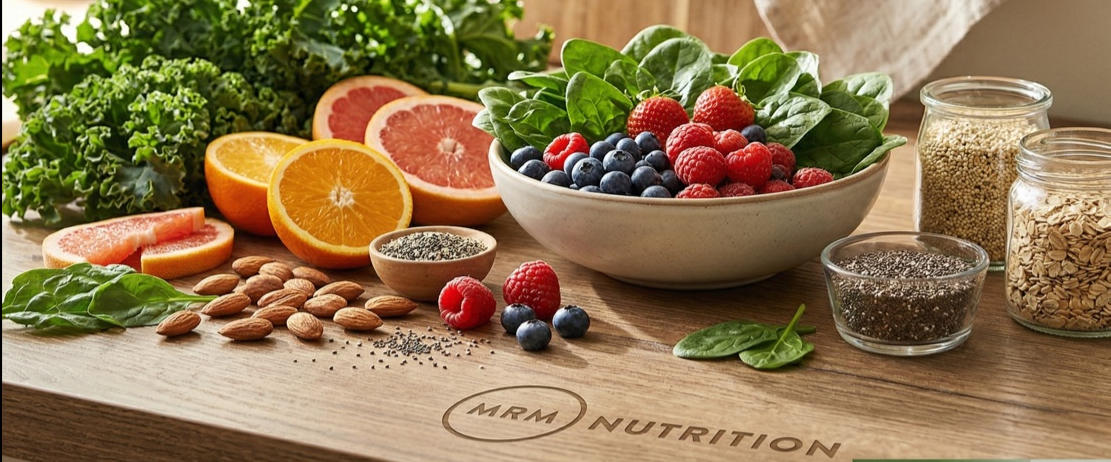
Diet is the single biggest lever you have over your gut microbiome. Before reaching for a supplement, it helps to know exactly which foods to improve gut health belong on your plate—and why. This guide breaks down the best fiber, fermented, and prebiotic foods for digestion, walks through a sample day of eating, and covers when a supplement is worth adding to the mix. For the full picture of daily habits beyond food, read our companion guide to improving gut health naturally.
Why Food Comes First for Gut Health
Every meal either feeds beneficial gut bacteria or starves them. Fiber, fermented foods, and plant diversity are the raw materials your microbiome uses to thrive, and no supplement can fully substitute for a varied, whole-food diet. That said, food and supplements are not an either-or choice; the right supplement can support a diet that is already moving in the right direction.
Best Foods to Improve Gut Health
These four food categories have the most consistent research behind them for supporting a healthy, diverse gut microbiome.
Fiber-Rich Whole Foods

Beans, lentils, oats, berries, and leafy greens all provide fiber that beneficial bacteria ferment into short-chain fatty acids, which support the gut lining.* If your meals regularly fall short on fiber, a whole-food source such as MRM's Whole Food Organic Fiber can help round out your daily intake.*
Shop MRM Whole Food Organic Fiber on Amazon
Fermented and Cultured Foods
Yogurt, kefir, sauerkraut, kimchi, miso, and tempeh introduce live bacterial cultures directly into your gut. Rotating a few different fermented foods through the week, rather than relying on just one, supports a broader range of beneficial strains.* For added support, MRM's Women's Probiotic offers targeted strains formulated for women's digestive and vaginal health.
Shop MRM Women's Probiotic on Amazon
Prebiotic Foods
Garlic, onions, leeks, asparagus, oats, and green bananas contain prebiotic fibers that specifically feed beneficial bacteria. Green banana flour is especially rich in resistant starch, and MRM's Green Banana Powder is an easy way to add it to smoothies, baked goods, or oatmeal.*
Shop MRM Green Banana Powder on Amazon
Polyphenol-Rich Foods
Berries, apples, onions, and green tea are rich in polyphenols, plant compounds that beneficial gut bacteria break down and use as fuel. Aiming for a wide variety of colorful produce each week is one of the simplest ways to support polyphenol intake.
Foods That Improve Gut Health: A Sample Day

Here is what a day built around foods that improve gut health might look like:
- Breakfast: Oatmeal with berries, ground flaxseed, and a spoonful of kefir
- Lunch: Mixed greens with lentils, roasted vegetables, and a garlic-forward dressing
- Snack: Apple slices with a small serving of plain yogurt
- Dinner: Grilled protein with asparagus, sweet potato, and a side of sauerkraut
Swapping just one meal a day toward this pattern is a manageable way to start.
Best Foods to Improve Digestion
A few foods stand out specifically for digestion and day-to-day comfort:
- Ginger, which has traditionally been used to ease occasional stomach discomfort
- Peppermint, often used to support a settled stomach after meals
- Papaya and pineapple, which contain natural digestive enzymes
- Fennel seeds, commonly chewed after meals in many cultures
- Easily digestible proteins, such as egg white protein, which are gentle on the stomach
If you want extra enzyme support around meals, MRM's Digest-All is designed to support the breakdown of proteins, fats, and carbohydrates, and MRM's Egg White Protein is a dairy-free protein option formulated with digestive enzymes for easier digestion.*
Supplements to Improve Gut Health: When Food Isn't Enough
Even with a thoughtful diet, some people benefit from supplements to improve gut health, especially when travel, a busy schedule, or food preferences make it hard to consistently hit fiber and fermented-food goals. In those cases, a fiber blend, a probiotic, or a digestive enzyme can help close the gap. MRM's gut health and digestive support line is built to complement, not replace, a fiber-rich diet.
As with any supplement, check with your healthcare provider before adding something new, particularly if you are pregnant, nursing, or managing a health condition.
The Bottom Line

The best foods to improve gut health are the ones you can eat consistently: fiber-rich plants, fermented foods, and prebiotic staples like garlic, oats, and green bananas. Supplements such as a whole-food fiber blend or a targeted probiotic can help on days when food alone falls short. For the daily habits that pair well with this food-first approach, read our companion guide: How to Improve Gut Health Naturally.
Frequently Asked Questions
What foods improve gut health the most?
Fiber-rich vegetables, legumes, and fermented foods like kefir and sauerkraut have the strongest research support for improving gut health. Eating a wide variety of plants each week, rather than relying on one or two foods, tends to produce the most noticeable results.
Can supplements help improve gut health as much as food?
Supplements can support gut health but generally work best alongside food rather than replacing it. Whole foods provide a broader mix of fiber, plant compounds, and live cultures than any single supplement can offer on its own.
What is the best diet for gut health?
A diet built around fiber-rich vegetables, legumes, whole grains, and fermented foods, with limited ultra-processed foods and added sugar, is widely considered the best approach for gut health. Consistency and variety matter more than following any single named diet.
Are probiotics or fiber more important for gut health?
Both play distinct, complementary roles, so neither is more important on its own. Probiotics introduce beneficial bacteria, while fiber feeds the bacteria already present, and most people benefit from prioritizing both rather than choosing one over the other.
How quickly do gut-healthy foods start working?
Some people notice less bloating and more regular digestion within one to two weeks of consistently eating more fiber and fermented foods. Broader improvements in microbial diversity typically take longer, often a few months of sustained dietary changes.
*These statements have not been evaluated by the Food and Drug Administration. This product is not intended to diagnose, treat, cure, or prevent any disease.